How Firestat may be an option for furnace outlet temperature protection in qualifying under-floor supply-air plenum applications
HVAC systems in multifamily housing, commercial buildings, schools, healthcare facilities, and other occupancies must be designed to meet the building, mechanical, electrical, and fire-safety requirements that apply to each project. When a system needs protection against excessive duct temperatures, selecting the right temperature-responsive control starts with understanding the function the equipment is designed to perform.
Firestat duct high limit switches provide a temperature-activated electrical switching function designed to respond when duct-air temperature reaches a specified high-temperature threshold. When correctly selected and integrated into an HVAC control circuit, a switch can interrupt that circuit as part of the equipment’s temperature-protection strategy.

Understand the Requirements for Your California Project
California’s building standards are published in Title 24 of the California Code of Regulations. The 2025 California Building Standards Code became effective January 1, 2026, but the edition and amendments applicable to a project should be confirmed with the local building department or authority having jurisdiction (AHJ).
One provision worth reviewing for a specific HVAC configuration is 2025 California Mechanical Code Section 608.7, titled “Temperature Limit.” Its scope is narrow: it applies to a furnace supplying warm air to the under-floor space used as a supply-air plenum described in the preceding provisions of Section 608. It is not a blanket requirement for every multifamily building or every conventional duct system.
Section 608.7 states that a furnace supplying warm air to that space must be equipped with an approved temperature-limit control that limits furnace outlet-air temperature to 200°F (93°C). The key requirements are the approved control, the specified outlet-air limit, and the particular under-floor supply-plenum application. The section does not name Firestat or mandate a specific brand.
A Firestat adjustable duct high-limit switch may be a candidate for evaluation because its published adjustment range is 100°F–250°F, which includes 200°F, and it opens its normally closed contacts as temperature rises. However, range alone does not demonstrate that a particular model meets Section 608.7. Before specifying it, confirm that the control is approved for this specific furnace outlet-air temperature-limit function, that the sensing location and wiring achieve the required limit, and that the equipment manufacturer, project engineer, and AHJ accept the proposed installation.
Official code resources:
- California Building Standards Commission — Codes: https://www.dgs.ca.gov/BSC/Codes
- California Department of Housing and Community Development — Approved Building Standards: https://www.hcd.ca.gov/building-standards/shl/approved-building-standards
Section 608.7: Could Firestat Be an Option?
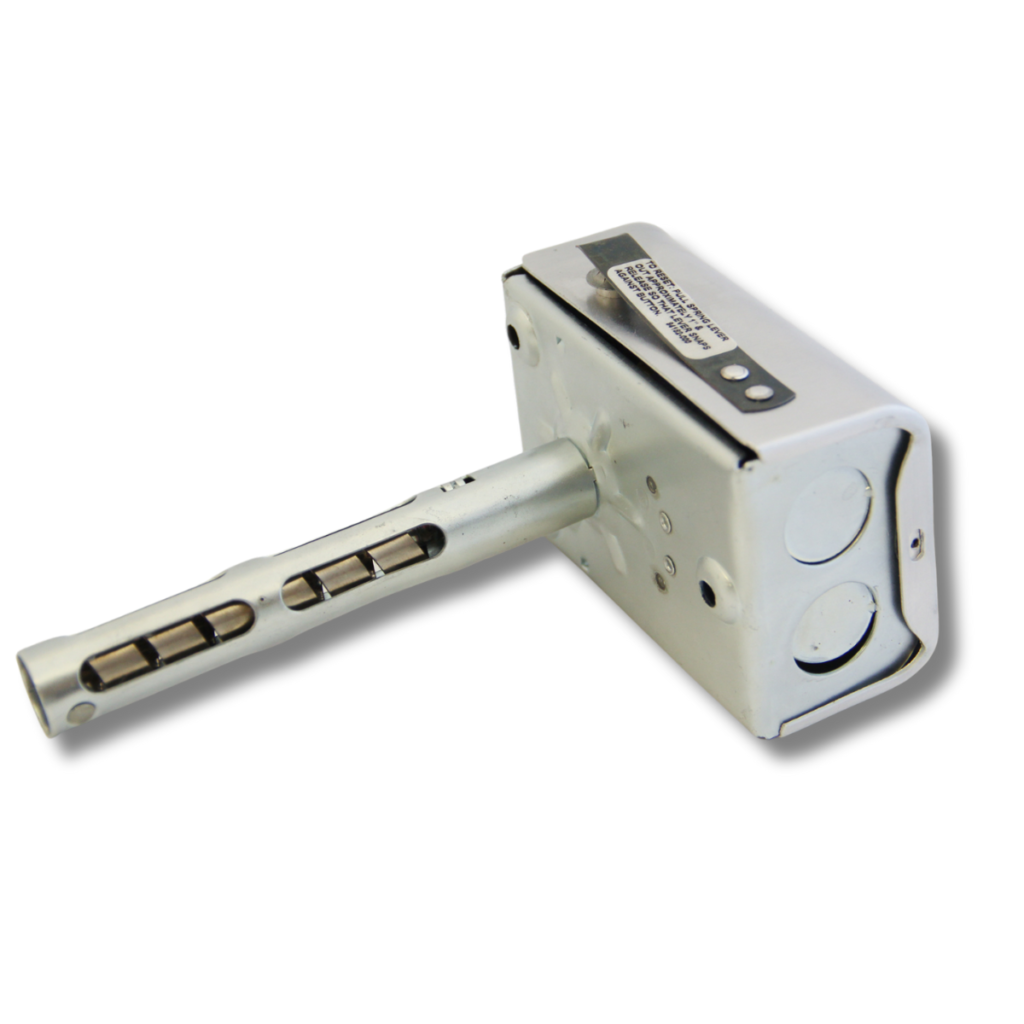
Potentially—subject to application review and approval. Firestat adjustable duct high-limit controls are published with a 100°F–250°F setting range, so a 200°F setting is within the available range. The product uses a helix-shaped bi-metal sensing element and a snap-action switch that opens the circuit when the selected temperature threshold is reached. See the adjustable-control product information: https://firestat.net/product/adjustable-temperature-duct-limit-controls/
The code’s 200°F value refers to furnace outlet-air temperature in the specific under-floor supply-air plenum application. It should not be interpreted as a universal Firestat setting recommendation for all HVAC systems. The final setpoint, sensor placement, electrical ratings, response of the connected equipment, and product approval must be verified for the actual installation.
Before presenting Firestat as a Section 608.7 solution, obtain confirmation from the equipment manufacturer and the responsible design professional or AHJ that the specific model is an approved temperature-limit control for the application. If that confirmation is not available, describe Firestat only as a product that may be evaluated—not as a control that is already established to comply.
How Firestat Duct High Limit Switches Work
Firestat duct high limit switches use a helix-shaped bi-metal sensing element that responds to rising duct-air temperature. When the selected temperature limit is reached, the mechanism activates a snap-action switch and opens the normally closed electrical contacts.
Depending on the system wiring and equipment design, opening the circuit can shut down connected heating, ventilation, or air-conditioning equipment. The actual response depends on how the switch is integrated into the equipment’s control circuit, so the intended shutdown function should be confirmed from the system design and equipment manufacturer’s documentation.
Firestat duct high limit switches use manual-reset operation. After a high-temperature event, the control remains tripped until the temperature has returned to a suitable level, the cause of the event has been investigated and corrected, and the switch is manually reset in accordance with its instructions.
Manual reset helps prevent the control circuit from automatically returning to its normal state simply because duct temperature has decreased. It does not, by itself, establish code compliance or replace other required life-safety systems.
How Firestat Can Support HVAC Temperature Protection
When selected for a suitable application and integrated into the system as intended, a Firestat duct high limit switch can provide:
- Temperature-activated circuit interruption when the specified trip threshold is reached.
- Manual-reset operation that requires deliberate intervention before the control returns to its normal state.
- A temperature-responsive input to a designed HVAC shutdown circuit.
- Adjustable and fixed-temperature options for different equipment specifications.
The suitability of a specific model for a code-regulated application depends on the required safety function, the model’s ratings and product listing, and the installation design. Confirm these details before specifying or installing a control.
Choose the Right Firestat Control

Adjustable-temperature models
Fixed-temperature models
Firestat adjustable models provide a 100°F–250°F setting range. They may be suitable when the equipment design calls for a field-adjustable trip temperature. The selected setting should be based on the system design and applicable requirements.
Explore Firestat adjustable duct limit controls to review product details and available configurations.
Fixed-temperature models provide a factory-preset trip point and may be appropriate when the equipment specifications identify a required temperature setting.
Compare Firestat fixed duct limit controls for available options.
Sensing element length and installation
Firestat adjustable models are available with 5-inch, 7.5-inch, and 11-inch sensing elements. The appropriate length depends on duct dimensions, the intended sensing location, available clearance, and the application requirements.
Before specifying a model, verify its trip temperature, electrical ratings, contact configuration, sensing-element length, manual-reset function, mounting requirements, and product listing. Use the Firestat duct high limit switch installation guide for installation-related information and consult the Firestat FAQ page for common product-selection questions.
Common Applications to Evaluate
Depending on the equipment design and project requirements, duct high-limit switches may be evaluated for:
- Specific multifamily or dwelling-unit HVAC systems, including qualifying under-floor supply-air plenum applications where Section 608 applies.
- Commercial office buildings and retail facilities.
- Schools, hospitals, and other institutional buildings.
- Electric duct heaters and air-handling equipment.
- OEM HVAC systems requiring a specified duct high-temperature limit function.
Application suitability and installation must be evaluated against the equipment manufacturer’s specifications, the project design, and applicable code requirements. Explore more examples on Firestat’s applications page.
California Project Verification Checklist
Before specifying or installing a control, confirm the following with the project team and AHJ:
- Which edition of Title 24 and which state or local amendments apply to the project?
- Does California Mechanical Code Section 608 apply to the system, and is the furnace supplying an under-floor supply-air plenum?
- Does the application require temperature limiting, duct smoke detection, a fire damper, or another distinct function?
- For a Section 608.7 application, is the proposed control approved for the function, and can the installed system limit furnace outlet air to 200°F as required?
- How will the switch be located and wired, and will the actual furnace outlet-air temperature remain within the required limit?
- Has the equipment manufacturer, design professional, and local AHJ accepted the specific model and installation?
Confirming these details helps the project team determine whether the proposed control is appropriate. A product’s temperature range or features alone do not establish code compliance.
Find the Right Firestat Duct High Limit Control
Firestat offers manual-reset duct high-limit switches for suitable HVAC and OEM applications. For a project considering California Mechanical Code Section 608.7, an adjustable model may be evaluated because its 100°F–250°F range includes 200°F; acceptance for the specific application must be confirmed before it is specified as the required control.
Explore the full Firestat duct high limit control product line.
For purchasing options, visit the distributor page. For product selection assistance, contact Senasys and include the equipment type, required trip temperature, existing part number if available, duct dimensions, and electrical requirements.
Important Code Note
This article provides general product-selection information and is not a legal interpretation or determination of code compliance. Verify the current adopted code edition, relevant provisions, amendments, product listings, and installation requirements with the authority having jurisdiction before specifying a control for a code-regulated application.